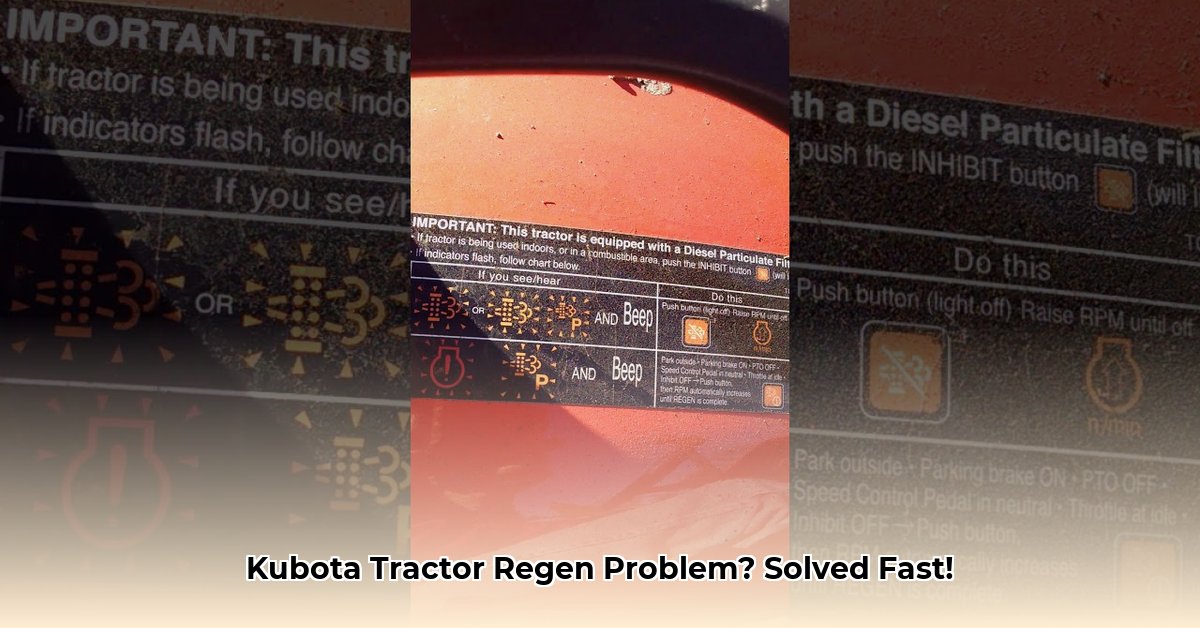
Recognizing the Need for Regeneration: Warning Signs and Symptoms
A malfunctioning Diesel Particulate Filter (DPF) in your Kubota tractor can significantly impact performance and longevity. Understanding the warning signs is crucial for timely intervention. Ignoring these signals can lead to costly repairs. So, how do you know if your Kubota needs a DPF regeneration? For older models, check out this helpful resource: Older Kubota Info.
Several indicators signal the need for a regeneration cycle. The most obvious is a flashing warning light on your tractor's dashboard, often accompanied by a corresponding message. Other symptoms include a noticeable drop in engine power, sluggish acceleration, or excessive black smoke from the exhaust. These point to a clogged DPF, hindering proper exhaust flow. Have you experienced any of these? Don't delay; addressing these early can save you time and money.
Kubota Tractor Regeneration: Model-Specific Steps
The DPF regeneration process varies drastically depending on your Kubota tractor model (M-series, BX-series, L-series, etc.). There is no one-size-fits-all solution. Your owner's manual is the ultimate guide, providing precise, model-specific instructions. Failure to follow these instructions may result in damage to your tractor, potentially voiding warranties. Always consult your owner's manual before beginning any regeneration procedure.
Illustrative Example (Generic; Consult Your Manual):
Active regeneration, often requiring operator intervention, might involve these general steps:
- Safety First: Ensure the tractor is parked on a level surface, away from flammable materials. Wear appropriate safety gear as needed.
- Prepare the Engine: Start the engine and allow it to reach operating temperature.
- Initiate Regeneration: Follow your manual's instructions to initiate the regeneration cycle. This often involves running the engine at higher RPMs for a specified duration.
- Monitor the Process: Closely observe your dashboard for indicators showing regeneration progress.
- Post-Regeneration Check: Once complete, check for any error codes and consult your manual if necessary.
Passive regeneration in contrast, occurs automatically under specific operating conditions without requiring operator input. Your owner's manual will clearly detail whether your model uses active or passive regeneration.
Passive vs. Active Regeneration: Understanding the Differences
Kubota tractors employ both passive and active DPF regeneration methods. Passive regeneration occurs automatically during normal operation under specific conditions (e.g., sustained high engine loads or speeds). Active regeneration, however, usually requires operator intervention according to the instructions provided in your specific owner's manual. Understanding this distinction is essential for proper maintenance.
Troubleshooting Common Issues: Error Codes and Solutions
Despite following the correct procedure, regeneration issues can occur. Error codes often appear on your dashboard, indicating specific problems. Your owner's manual provides a detailed list of possible error codes and their explanations. These codes often signify more severe underlying problems that require professional attention. Attempting DIY repairs without the necessary expertise can worsen the situation and cause more extensive damage.
Here's a sample table of common error codes (consult your manual for model-specific information).
| Error Code | Description | Solution |
|---|---|---|
| P0401 | Exhaust Gas Recirculation (EGR) System Issue | Requires professional diagnostic and repair. |
| P2463 | DPF Blocked or Malfunctioning | Regeneration attempt; if unsuccessful, professional servicing is needed. |
Preventative Maintenance: Minimizing Regeneration Frequency
Preventative maintenance significantly reduces the frequency of DPF regeneration. This includes using high-quality diesel fuel and adhering strictly to your Kubota tractor's recommended service schedule.
- Fuel Quality: Using high-quality diesel fuel minimizes soot build-up, reducing the need for frequent regeneration. Dirty fuel leads to more frequent cleaning cycles.
- Regular Servicing: Following the recommended service intervals ensures optimal engine performance and reduces the strain on the DPF, postponing regenerations.
Proactive maintenance is cheaper than reactive repairs!
Conclusion: Maintaining Your Kubota Tractor's DPF
Regular DPF regeneration is crucial for maintaining your Kubota tractor's performance and longevity. Understanding the specific regeneration process for your model is paramount. Always consult your owner's manual for precise instructions; neglecting this step can lead to costly damage. Remember, preventative maintenance is your best ally in minimizing the frequency of regenerations and optimizing your tractor’s life.
Disclaimer:
This guide offers general information and should not be considered a substitute for professional advice. Always consult your Kubota tractor's owner's manual for model-specific instructions. Incorrect DPF regeneration can cause severe damage to your tractor. If you encounter any issues, contact your Kubota dealer or a qualified mechanic.